
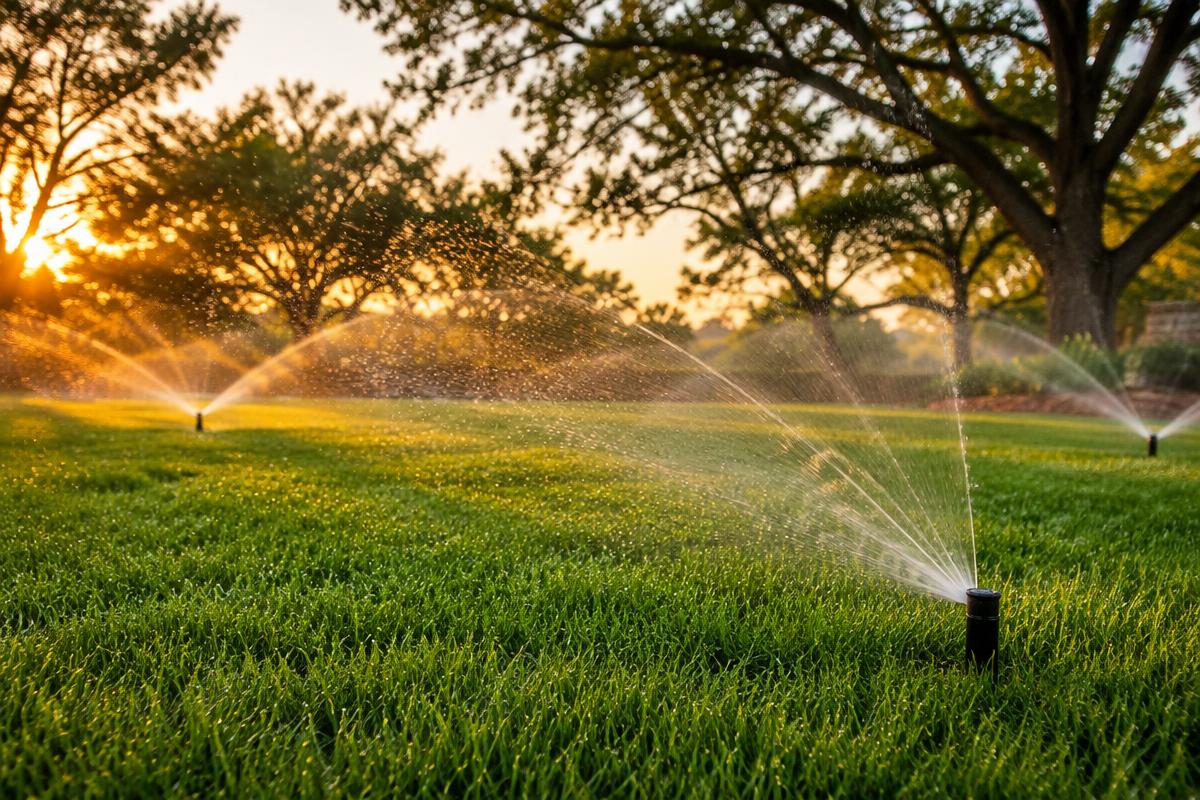
A Crosby lawn does not need a generic timer copied from a drier city. Clay along FM 2100 holds water, builder fill in Channelview lets it go, and a shaded Atascocita bed is not the front turf. Start with the soil you have, then set the clock.
Test the soil before you trust the minutes
Run a zone and watch. If water puddles and heads for the street in a few minutes, the cycle is longer than the ground can take. Clay in Crosby and Baytown does this often. Split the runtime into shorter cycles with a soak between them. That is only worth doing after the heads are actually landing on the lawn. See why clay sends water into the street.
Water deeper, less often, and not all at once
A daily sprinkle keeps roots shallow. Fewer, deeper sessions fit turf better when the nozzles match. Shrubs and turf should not share a station if you can avoid it. Coverage correction is the visit that separates those, instead of watering everything to the driest corner.
Shade, sun, and a neighbor’s schedule
A sunny Huffman front yard and a side bed under pines want different programs. Copying a neighbor’s start times ignores that. Read your own zones. The guide to uneven coverage walks through what to look for while a zone runs.
Storms and sensors
Seasonal rain should change the schedule. A rain sensor helps only when it is not stuck. After a Gulf storm, check it before you assume the timer failed. When the system still runs in the rain covers that case, and controller repair is the right request if the sensor and the program disagree.
Walk it while it runs
No schedule fixes a clogged nozzle, a tilted head, or a leak. Once a year, run every zone. That is a tune-up. In Sheldon, walk out to the last head. Pressure there tells you more than the head by the porch.
If you want a second set of eyes on the program, send the city and what the lawn is doing through the request form. A schedule change is not a substitute for a broken valve.